American Samoa Flag Meaning
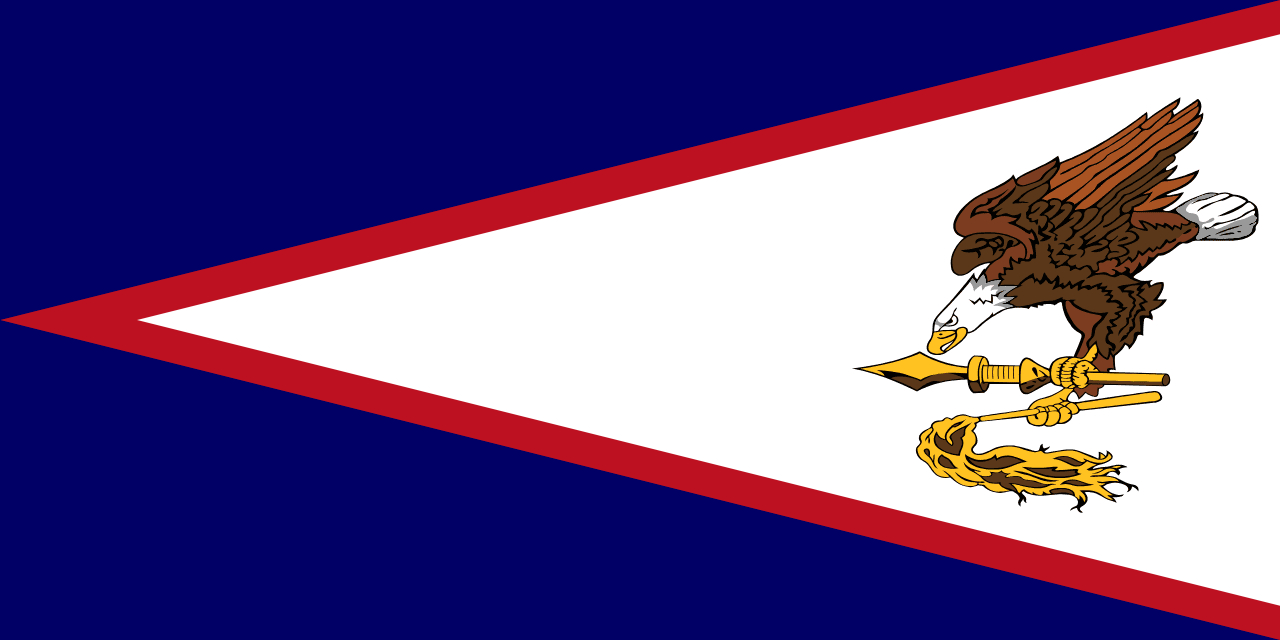
Red, white, and blue field featuring a bald eagle holding traditional Samoan symbols, representing the blend of American and Polynesian cultures.
- Continent
- Oceania
- Adopted
- 1960
- Ratio
- 1:2
- Colors
- red, white, blue
Symbolism
- Bald Eagle
- Represents American sovereignty and protection, symbolizing the United States' role as guardian of American Samoa while respecting local autonomy.
- War Club (Uatogi)
- Traditional Samoan war club held in the eagle's right talon represents the power and authority of traditional Samoan chiefs and the strength of Polynesian culture.
- Fly Whisk (Fue)
- Ceremonial fly whisk held in the eagle's left talon symbolizes the wisdom and peaceful leadership of Samoan chiefs in traditional governance and cultural ceremonies.
- Red Triangle
- Represents the courage and sacrifice of the Samoan people, as well as the strength needed to maintain cultural identity within an American political framework.
- Blue Field
- Symbolizes the vast Pacific Ocean surrounding the islands and American Samoa's connection to both the United States and the broader Pacific community.
- White Triangle
- Represents peace, purity, and the hope for harmony between American governance and traditional Samoan culture and values.
History
- 1000-1300 AD: Polynesian settlers arrived in Samoa, establishing the rich cultural traditions that continue to define Samoan identity today.
- 1899: Tripartite Convention divided the Samoan islands between Germany (Western Samoa) and the United States (American Samoa), with Britain withdrawing claims.
- April 17, 1900: United States formally took possession of American Samoa, with local chiefs signing the Deed of Cession transferring sovereignty while maintaining traditional authority structures.
- 1929-1951: U.S. Navy administered the territory, building infrastructure and establishing the foundation for American Samoa's unique political status.
- April 27, 1960: Current flag officially adopted, symbolizing the unique relationship between American sovereignty and Samoan cultural autonomy.
- 1978: First popularly elected governor took office, marking increased self-governance while maintaining territorial status under U.S. federal authority.
Trivia
- American Samoans are U.S. nationals but not automatically U.S. citizens, creating a unique legal status among American territories.
- The territory operates on Samoa Standard Time, making it one of the last places on Earth to see each new day due to its location near the International Date Line.
- American Samoa has produced more NFL players per capita than any U.S. state or territory, with Samoan culture emphasizing physical strength and athletic achievement.
- The fa'a Samoa (Samoan way) traditional culture system operates alongside American law, with traditional chiefs (matai) maintaining significant authority in village governance.
- Pago Pago Harbor is one of the finest natural deepwater harbors in the South Pacific and served as a crucial U.S. naval base during World War II.
- American Samoa is the only U.S. territory south of the equator, giving it a unique geographic position in American territorial holdings.
- The territory's economy relies heavily on tuna fishing and canning, with the largest tuna cannery in the world located in the capital.
- Traditional Samoan architecture features open-sided houses called fale, designed for the tropical climate and communal island lifestyle.
- American Samoa participates separately from the United States in some international organizations, including having its own Olympic team.
- The islands are home to unique wildlife including the Pacific flying fox (pe'a) and the only land mammal native to Samoa.
- Traditional Samoan tattoos (tatau) originated in these islands and gave the English word 'tattoo' to the world through early European contact.
- American Samoa's minimum wage is lower than the federal U.S. minimum wage due to special economic considerations for the territory.
- The territory has no military draft, but American Samoans serve in the U.S. military at higher rates per capita than most U.S. states.
Related Countries
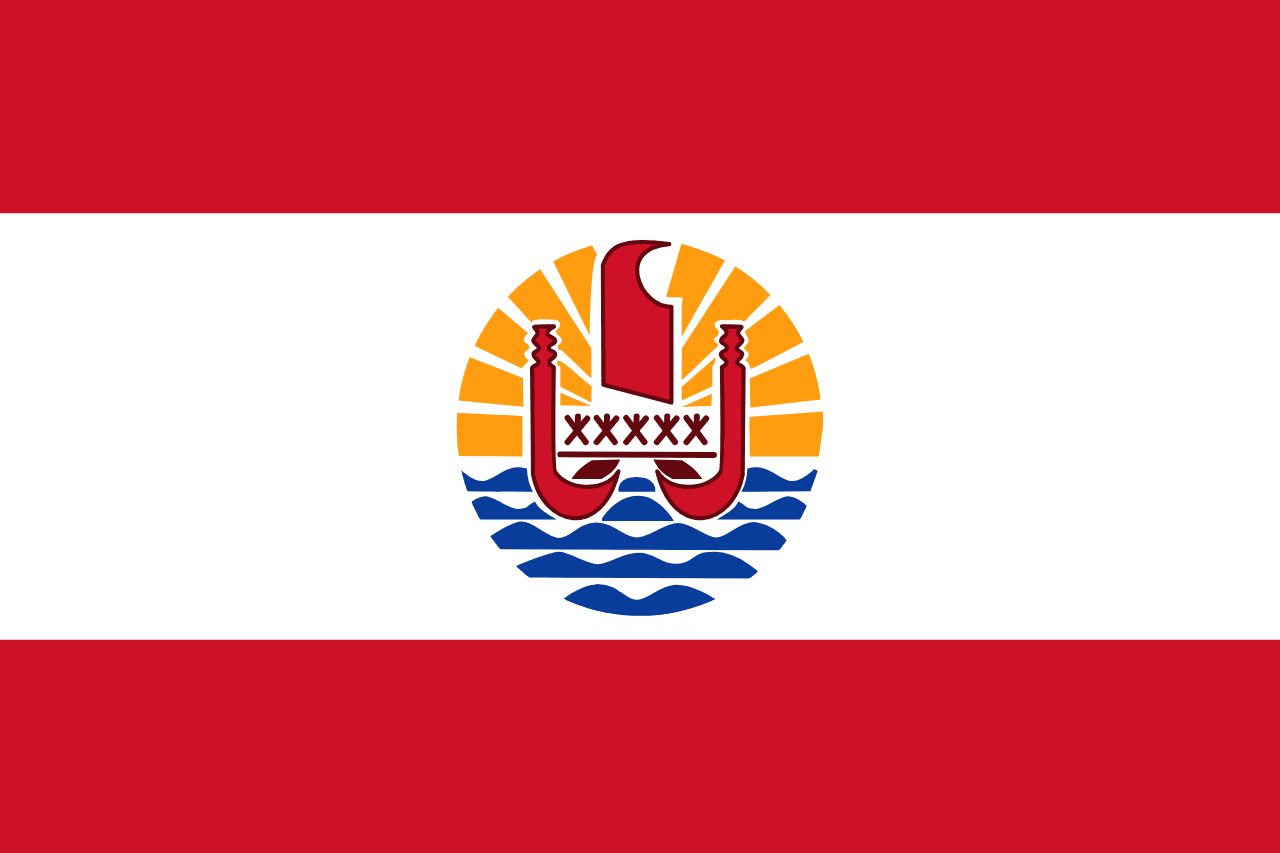
French Polynesia
Oceania
Red and white horizontal stripes with central emblem featuring an outrigger canoe, sun, and ocean waves representing Polynesian maritime culture and French governance.
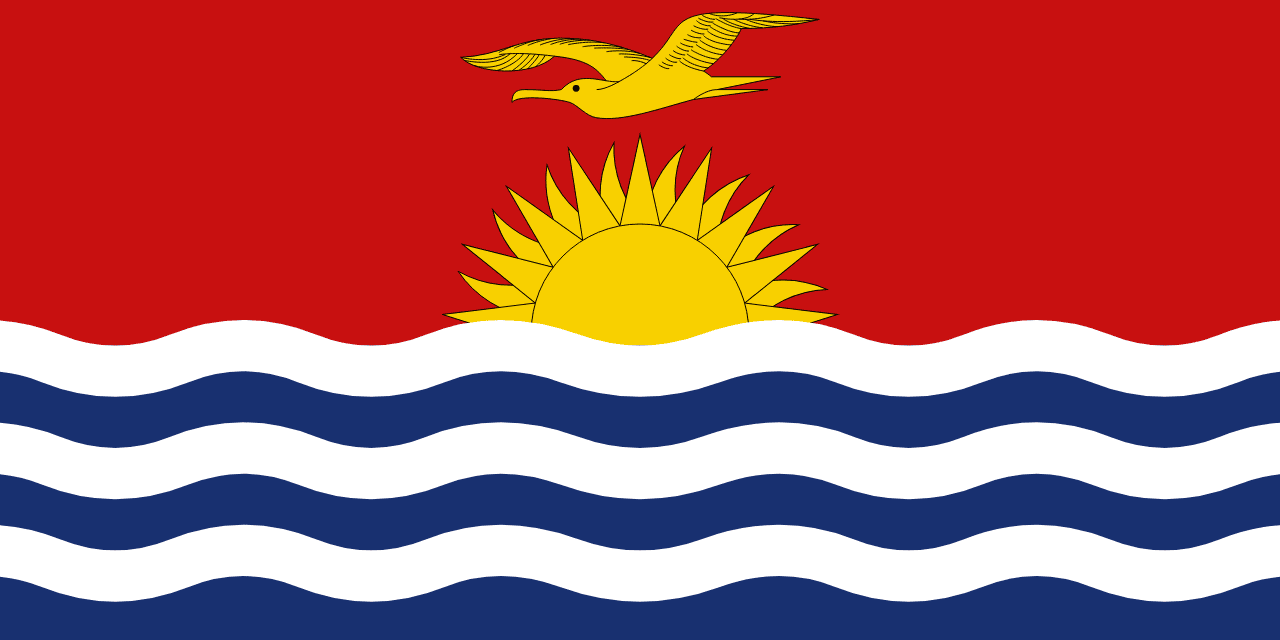
Kiribati
Oceania
A red upper field with a golden frigatebird flying over a rising sun above blue and white wavy stripes, representing the Pacific sunrise, ocean waves, and the unique geography of this coral atoll nation spread across the international dateline.
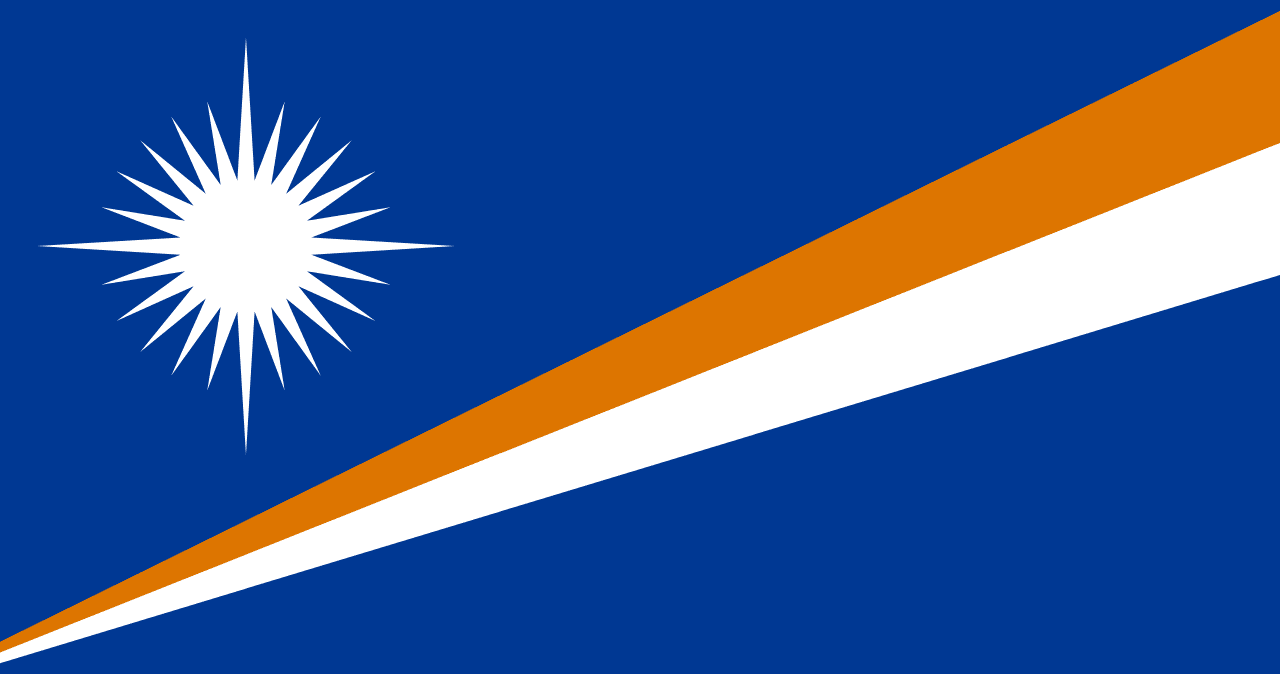
Marshall Islands
Oceania
A blue field with diagonal orange and white stripes extending from the lower left, and a white 24-pointed star in the upper left corner, representing the Pacific Ocean, the island chains, and the Christian faith of this coral atoll nation.
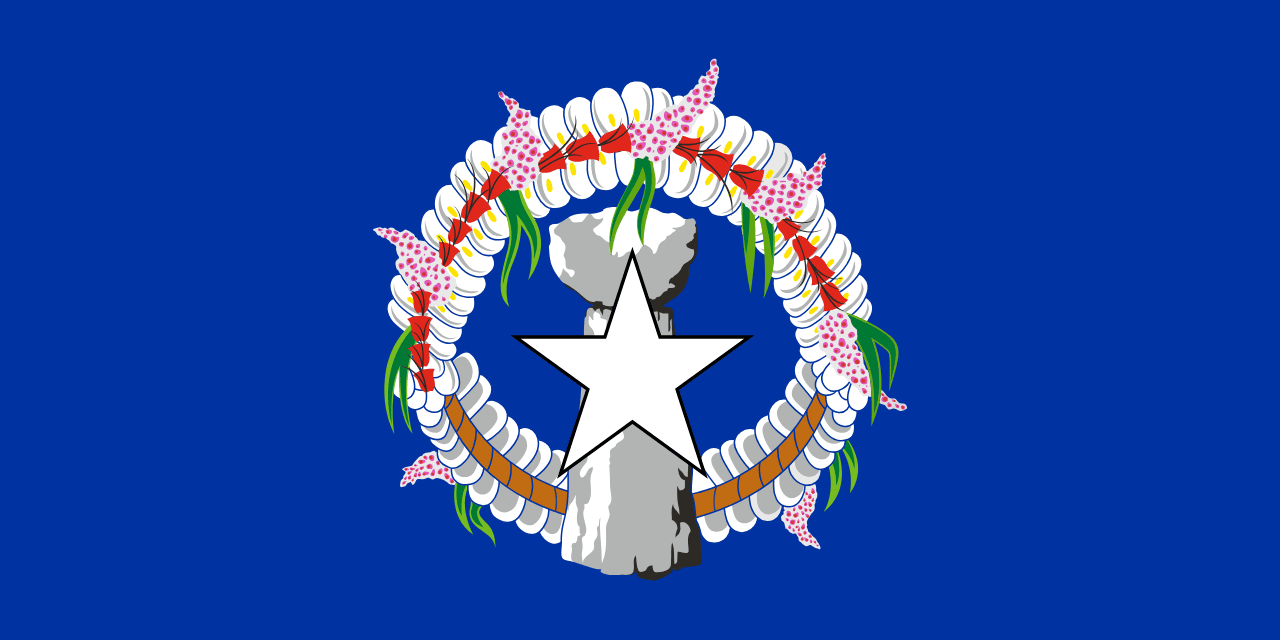
Northern Mariana Islands
Oceania
A blue field with a white star and gray latte stone behind it, surrounded by a decorative wreath. The flag represents the islands’ indigenous culture, U.S. affiliation, and Pacific identity.
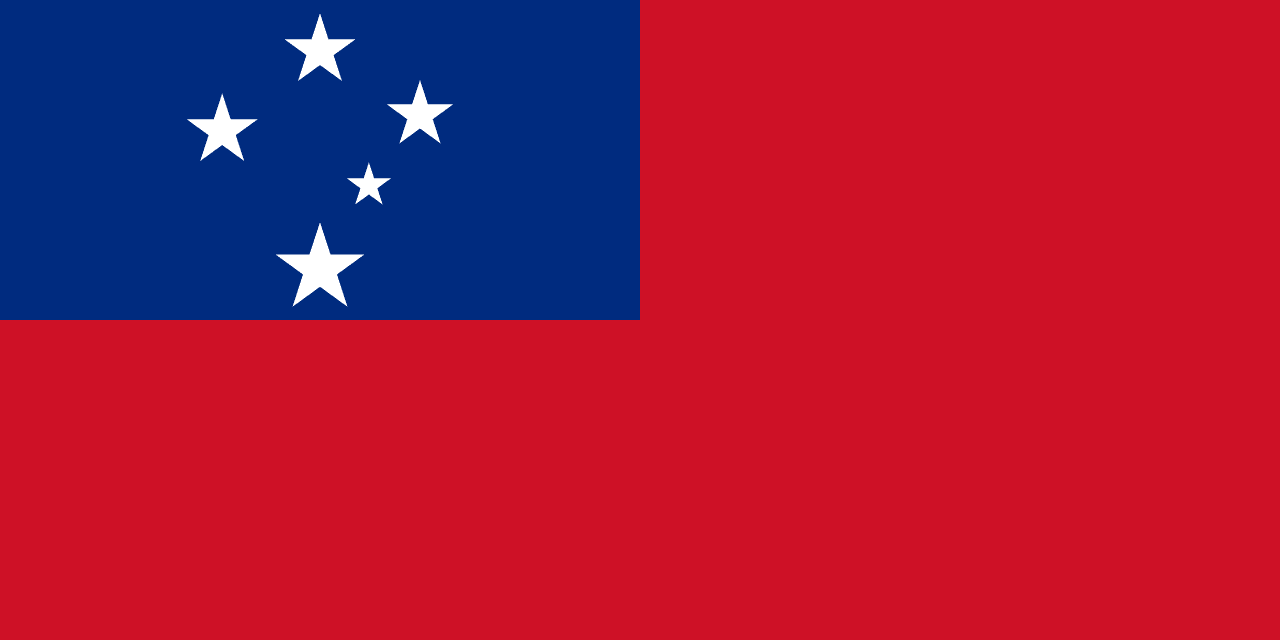
Samoa
Oceania
A red field with a blue rectangle in the upper hoist containing the Southern Cross constellation in white. The flag reflects Samoan heritage and its place in the South Pacific.
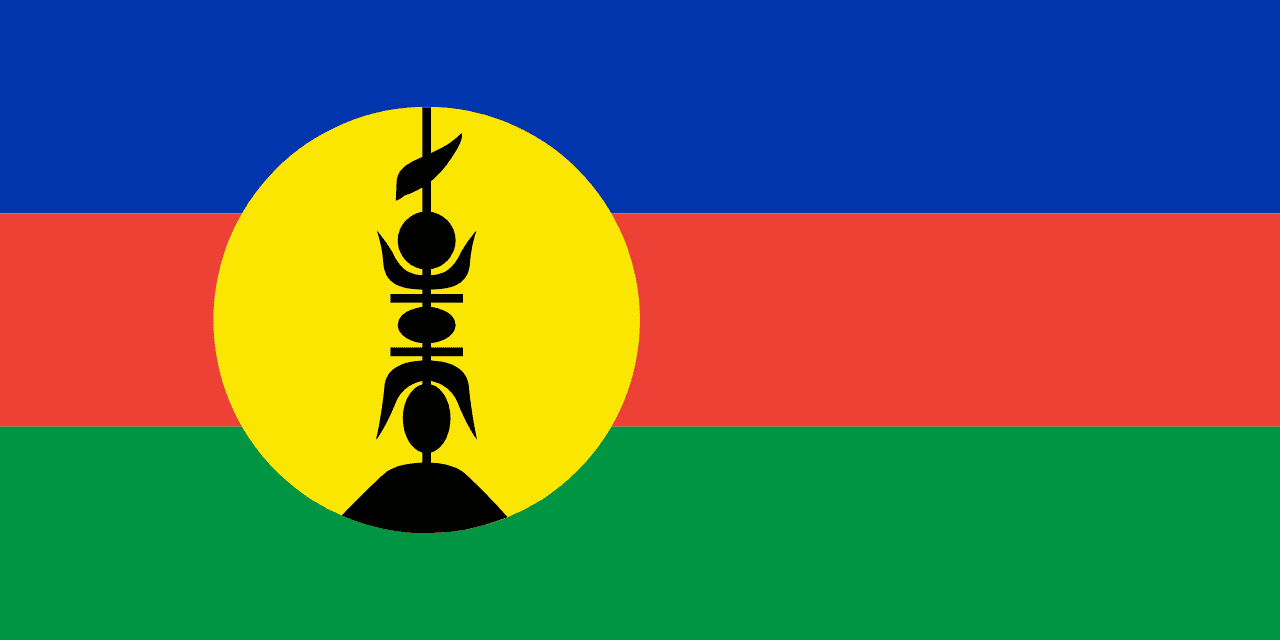
New Caledonia
Oceania
The flag of New Caledonia is one of the few in the world to be flown alongside another—the French tricolor, symbolizing both local identity and continued ties to France. Adopted in 2010 after years of debate, the design features blue, red, and green horizontal bands with a yellow disc at the center bearing a black flèche faîtière, a traditional rooftop spear. Each element carries meaning rooted in the Kanak people’s culture, the islands’ natural environment, and the struggle for recognition within a French overseas territory. To study this flag is to see the blending of indigenous heritage with colonial history, and how symbols can serve as a bridge between tradition and modern political reality.