Vatican City Flag Meaning
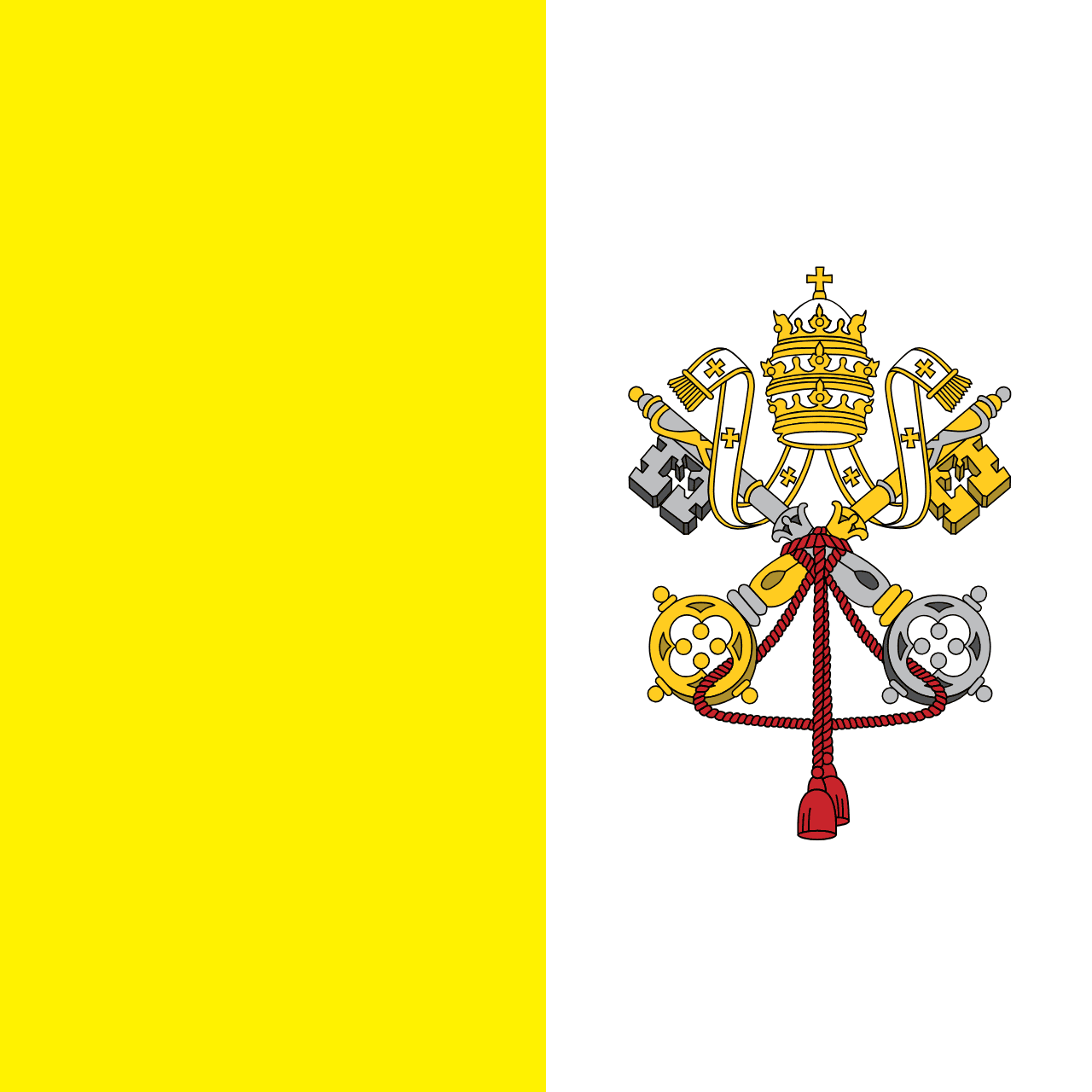
Two vertical bands of yellow and white with the papal coat of arms featuring crossed keys and the papal tiara on the white band, representing the temporal and spiritual power of the Pope as sovereign of the world's smallest state and leader of the global Catholic Church.
- Continent
- Europe
- Adopted
- 1929
- Ratio
- 1:1
- Colors
- yellow, white
- Designer
- Unknown
Symbolism
- Yellow Band
- Represents the golden key of heaven and the spiritual authority of the Pope, symbolizing the divine mandate and the eternal nature of the Catholic Church's mission on Earth.
- White Band
- Represents the silver key of Earth and the temporal authority of the Pope, symbolizing papal sovereignty, purity of faith, and the peace that the Church seeks to bring to the world.
- Crossed Keys
- Represent the 'keys to the kingdom of heaven' given by Jesus Christ to Saint Peter, symbolizing the papal authority to bind and loose, and the succession of the Pope as Peter's successor.
- Papal Tiara
- Represents the Pope's triple role as teacher, ruler, and high priest, though modern popes have abandoned wearing the tiara in favor of the simpler episcopal mitre, the symbol remains on the coat of arms.
- Red Cord
- The red cord binding the keys represents the blood of Christ and the martyrdom of Saint Peter, symbolizing the sacrifice that underlies papal authority and Christian faith.
History
- 1st Century AD: According to Catholic tradition, Saint Peter was martyred and buried on Vatican Hill, establishing the site's sacred significance and beginning the papal connection to this location in Rome.
- 313-756 AD: Emperor Constantine legalized Christianity and built the first St. Peter's Basilica, while the Donation of Pepin established the Papal States, giving the Pope temporal authority over central Italy.
- 756-1870: The Papal States covered much of central Italy, with the Pope ruling as both spiritual leader of Catholics worldwide and temporal sovereign of territories around Rome.
- September 20, 1870: Italian unification eliminated the Papal States when Rome was incorporated into the Kingdom of Italy, creating the 'Roman Question' about papal sovereignty and independence.
- 1870-1929: Popes considered themselves 'prisoners of the Vatican,' refusing to recognize Italian sovereignty over Rome and maintaining claims to temporal independence despite having no territory.
- February 11, 1929: The Lateran Treaty between Pope Pius XI and Mussolini established Vatican City as a sovereign state, resolving the Roman Question and creating the world's smallest country.
- 1929: The current flag was adopted along with Vatican statehood, formalizing the yellow and white colors with papal symbols that had been used informally for centuries.
- 1962-1965: The Second Vatican Council under Pope John XXIII and Paul VI modernized Catholic Church practices, promoted ecumenism, and emphasized social justice and human rights.
- 1978-2005: Pope John Paul II's long papacy brought global Catholic revival, played a key role in ending communism in Eastern Europe, and increased papal travel and international diplomacy.
- 2005-2013: Pope Benedict XVI's papacy focused on theological scholarship and traditional Catholic teachings, though it was marked by the sexual abuse crisis and his unprecedented resignation.
- 2013-Present: Pope Francis, the first Latin American and Jesuit pope, has emphasized social justice, environmental stewardship, and reform within the Catholic Church while maintaining traditional doctrine.
Trivia
- Vatican City is the world's smallest sovereign state by both area (0.17 square miles) and population (about 800 residents), making it smaller than most city parks.
- The flag represents the only remaining absolute monarchy in Europe, where the Pope exercises executive, legislative, and judicial powers as an elected sovereign.
- Vatican City has its own postal system, railway station (shortest in the world), and telephone system, while using the euro as currency despite not being an EU member.
- The Vatican Museums house one of the world's greatest art collections, including the Sistine Chapel with Michelangelo's ceiling and 'The Last Judgment.'
- Latin is the official language for Holy See documents, though Italian is used for daily administration, while the Pope may speak in numerous languages during audiences.
- The flag flies over a country that is entirely a UNESCO World Heritage site, recognizing its immense cultural, artistic, and spiritual significance to humanity.
- Vatican City has no permanent residents by birth - citizenship is generally granted only while residing there for work, and is usually temporary.
- The Swiss Guard, founded in 1506, serves as the Pope's security force and maintains the tradition of colorful Renaissance uniforms and ceremonial weapons.
- St. Peter's Basilica is one of the largest churches in the world and took over 100 years to build, featuring works by Bramante, Michelangelo, and Bernini.
- The flag represents the center of the world's largest religious organization, with about 1.3 billion Catholics worldwide looking to Vatican City for spiritual leadership.
- Vatican Radio broadcasts in dozens of languages worldwide, while Vatican Publishing House produces official Church documents and the daily L'Osservatore Romano newspaper.
- The Pope is elected by the College of Cardinals in the Sistine Chapel, with white smoke signaling a successful election and black smoke indicating continued deliberation.
- Vatican City operates its own internet domain (.va), telephone system, and even issues its own limited-edition euros that are highly sought after by collectors.
- The flag represents a state with enormous soft power influence, with papal statements on global issues carrying significant weight in international diplomacy and moral discourse.
- Despite its small size, Vatican City maintains diplomatic relations with 183 countries and plays an active role in international peace efforts and interfaith dialogue.
Related Countries
Switzerland
Europe
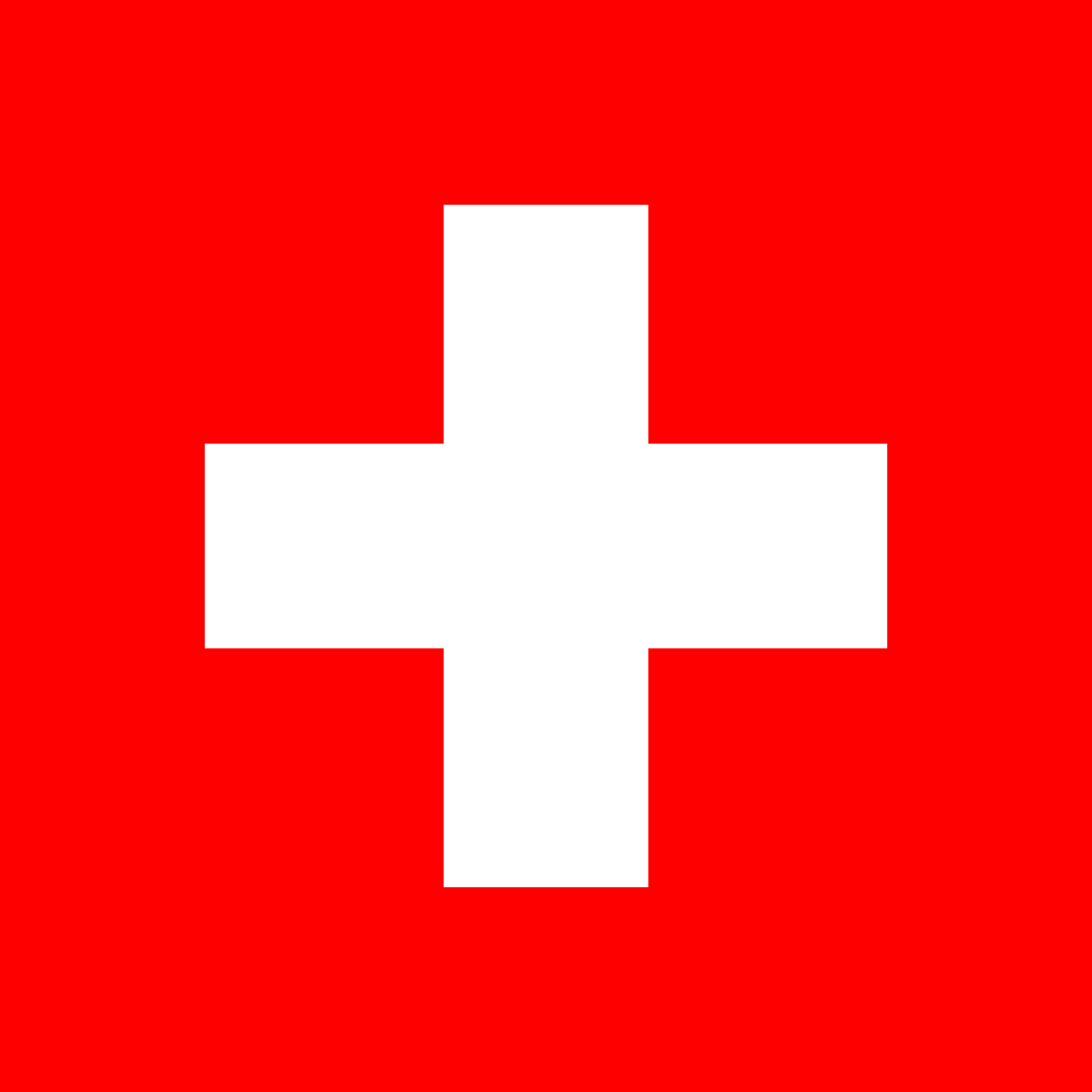
A red square field with a white Greek cross in the center, representing the Christian faith that united the early Swiss cantons and the blood shed in defense of freedom, with origins dating back to the Holy Roman Empire and medieval Swiss military banners.
Montenegro
Europe
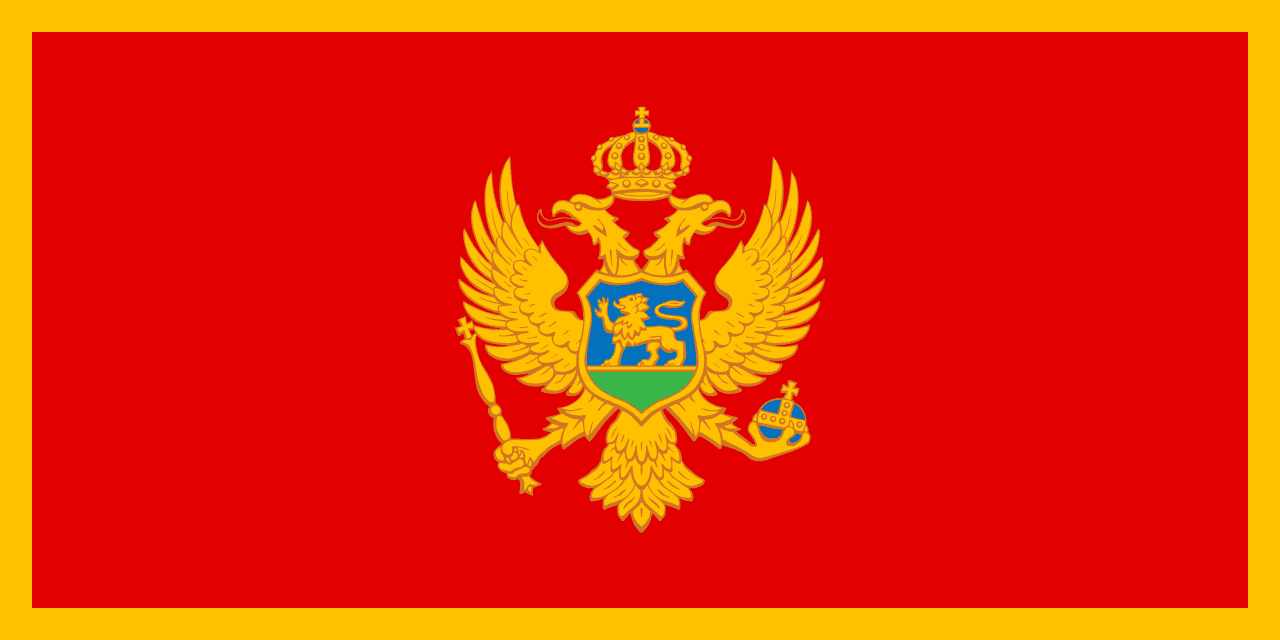
A red field with golden border and the coat of arms featuring a golden double-headed eagle, representing Montenegro's medieval heritage, Orthodox Christian identity, and recent independence from Serbia.
San Marino
Europe
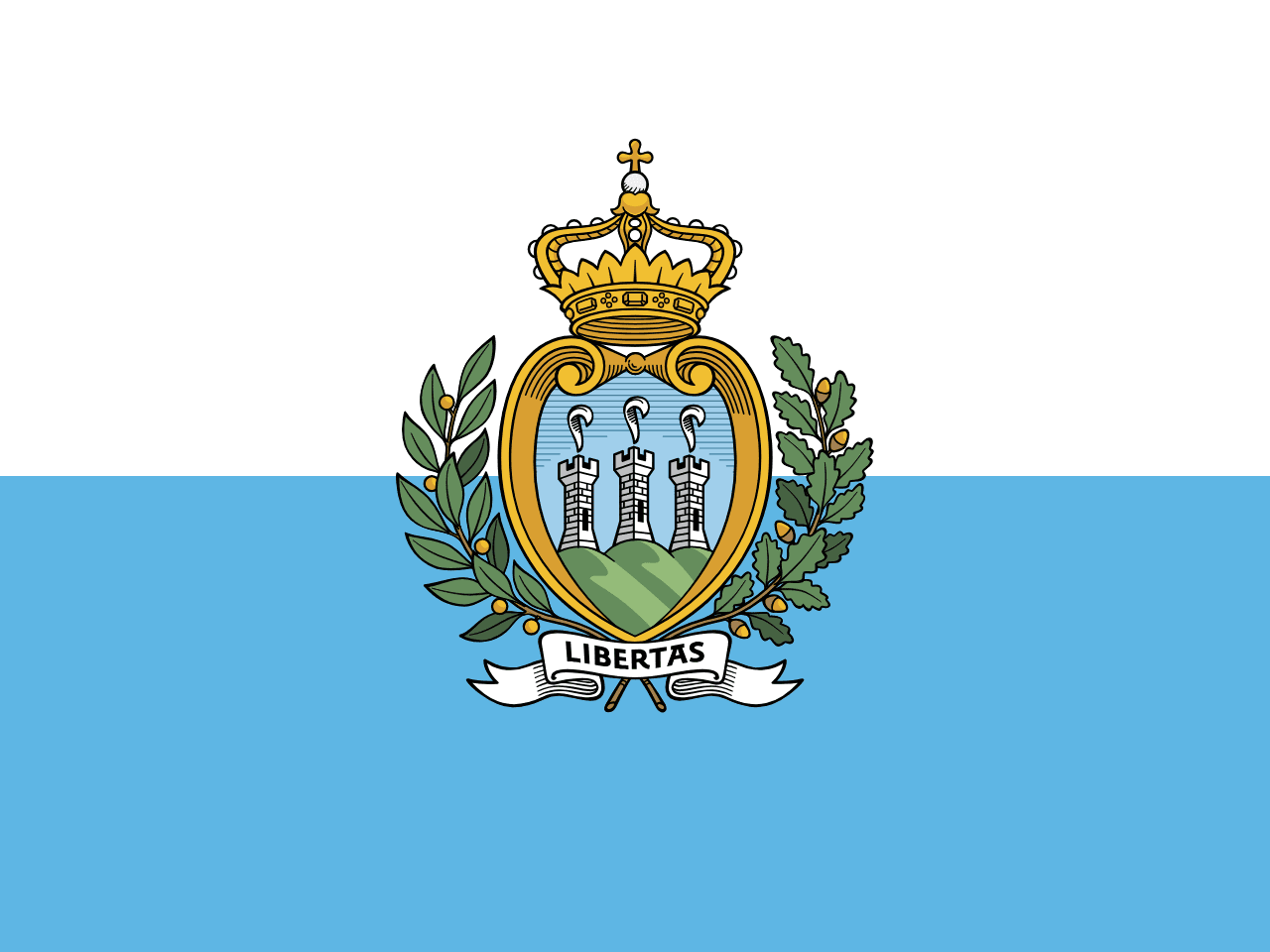
White and light blue horizontal bicolor with coat of arms featuring three towers representing the ancient fortress republic on Mount Titano.
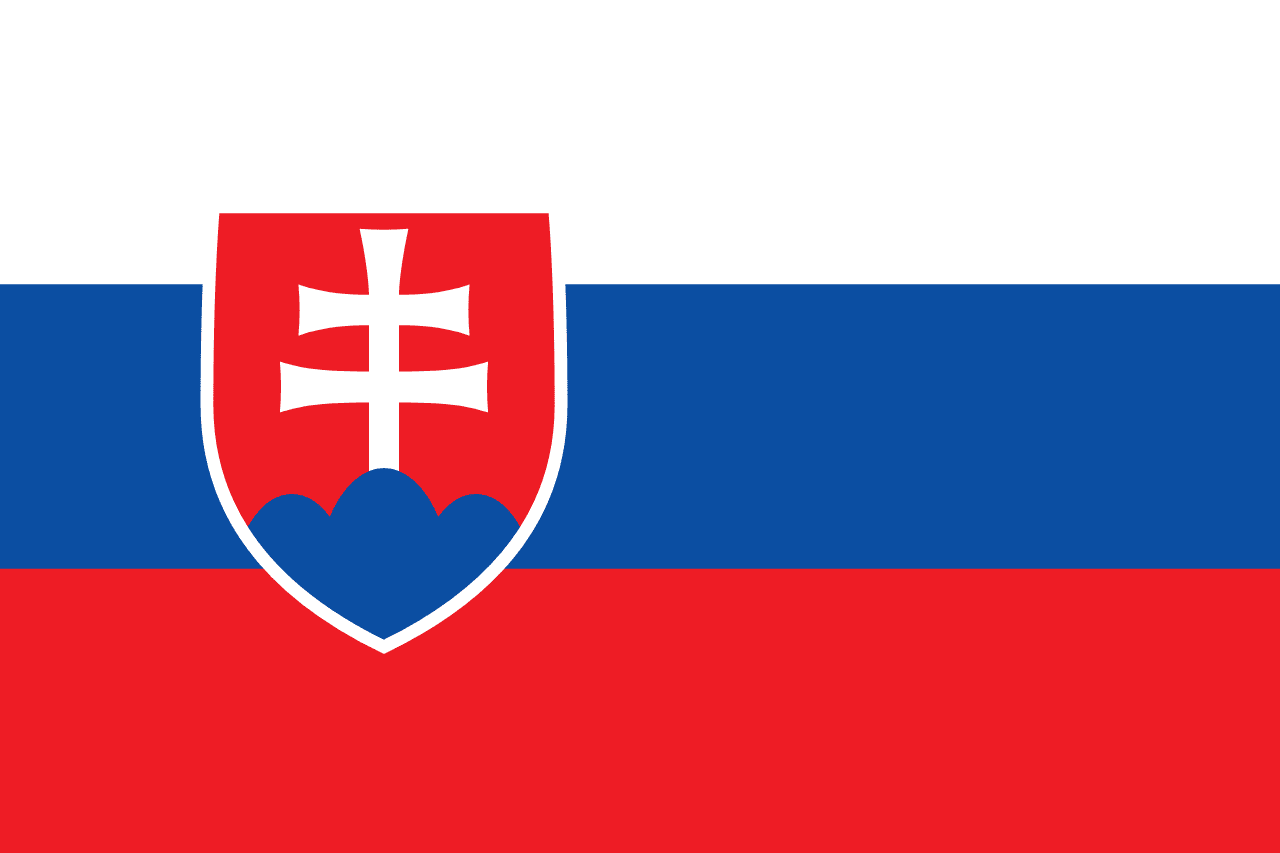
Slovakia
Europe
A horizontal tricolor of white, blue, and red with the Slovak coat of arms placed toward the hoist. The coat of arms features a double silver cross rising from three blue hills, symbolizing Christianity and Slovakia’s mountainous landscape.
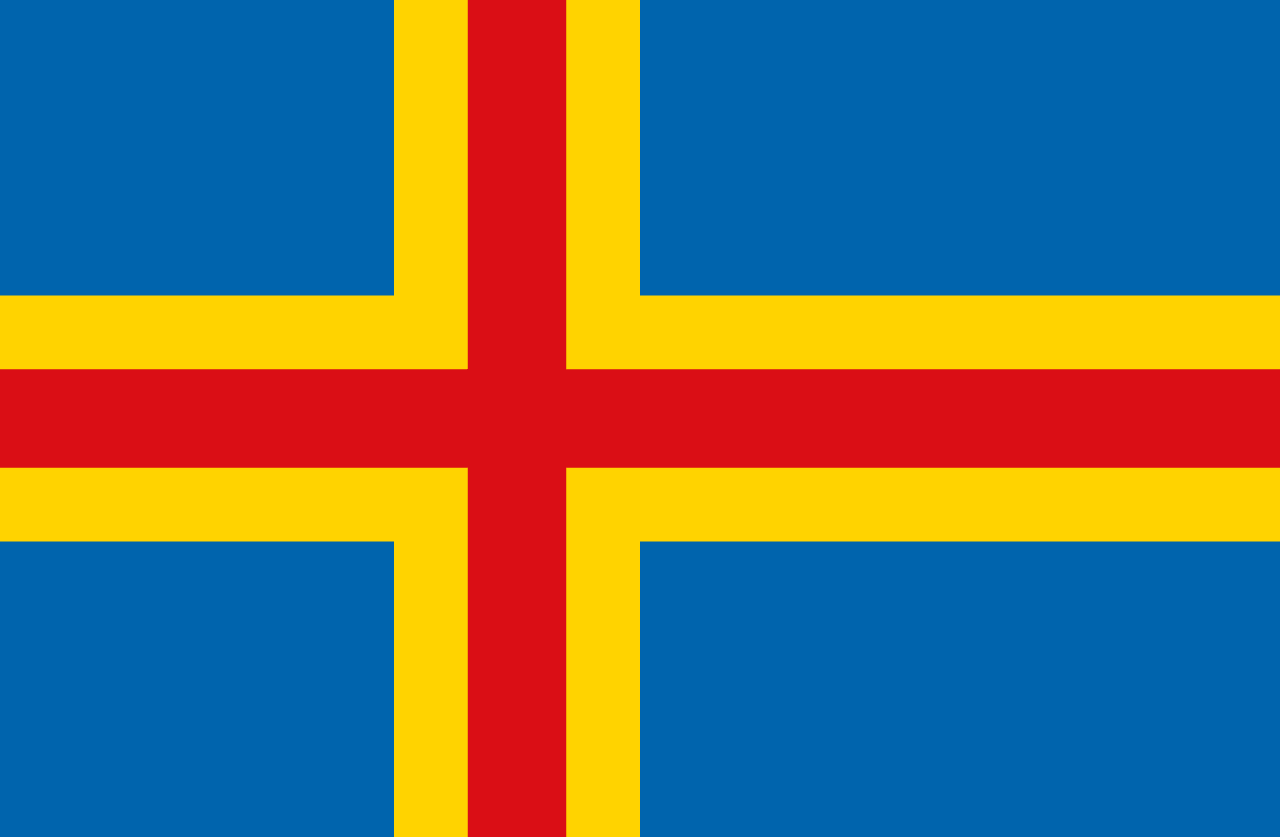
Åland Islands
Europe
Tucked between Sweden and Finland, the Åland Islands possess a flag that tells the story of a small community balancing geography, culture, and politics. Adopted in 1954, the banner features a golden-bordered red cross set against a blue field, a striking fusion of Nordic tradition and local identity. Its design nods both to Finland, the sovereign state to which Åland belongs, and to Sweden, with which the islands share language and heritage. More than a decorative emblem, the flag is a quiet declaration of autonomy. It's a reminder that this archipelago, though small in population, carries a distinct voice within the Nordic world. To trace its colors and cross is to uncover a history of compromise, self-government, and the enduring importance of symbols in defining a people’s place.
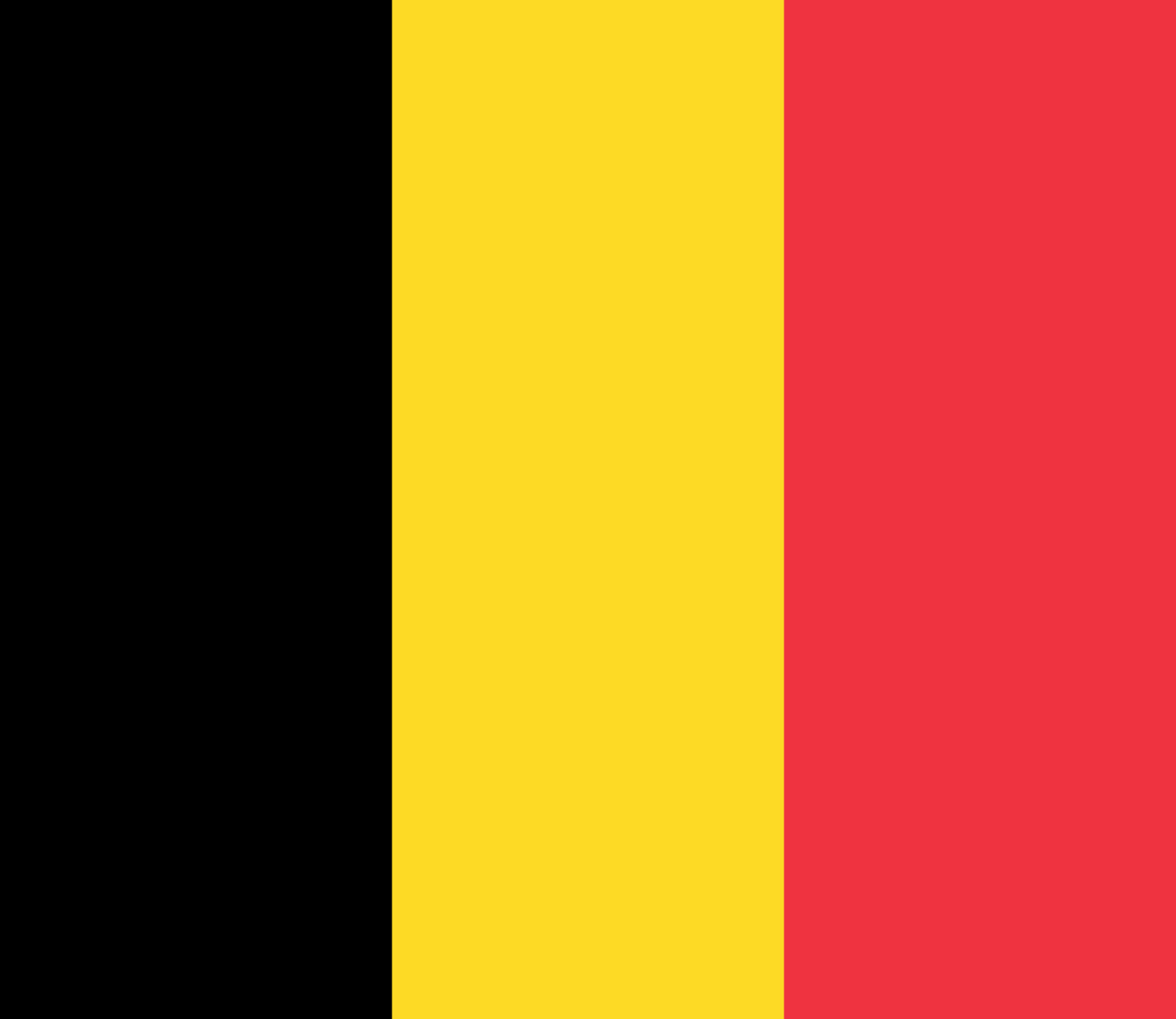
Belgium
Europe
Three vertical stripes of black, yellow, and red derived from the coat of arms of the Duchy of Brabant, adopted during Belgium's independence revolution and representing the nation's determination, generosity, and sacrifice.