Scotland Flag Meaning
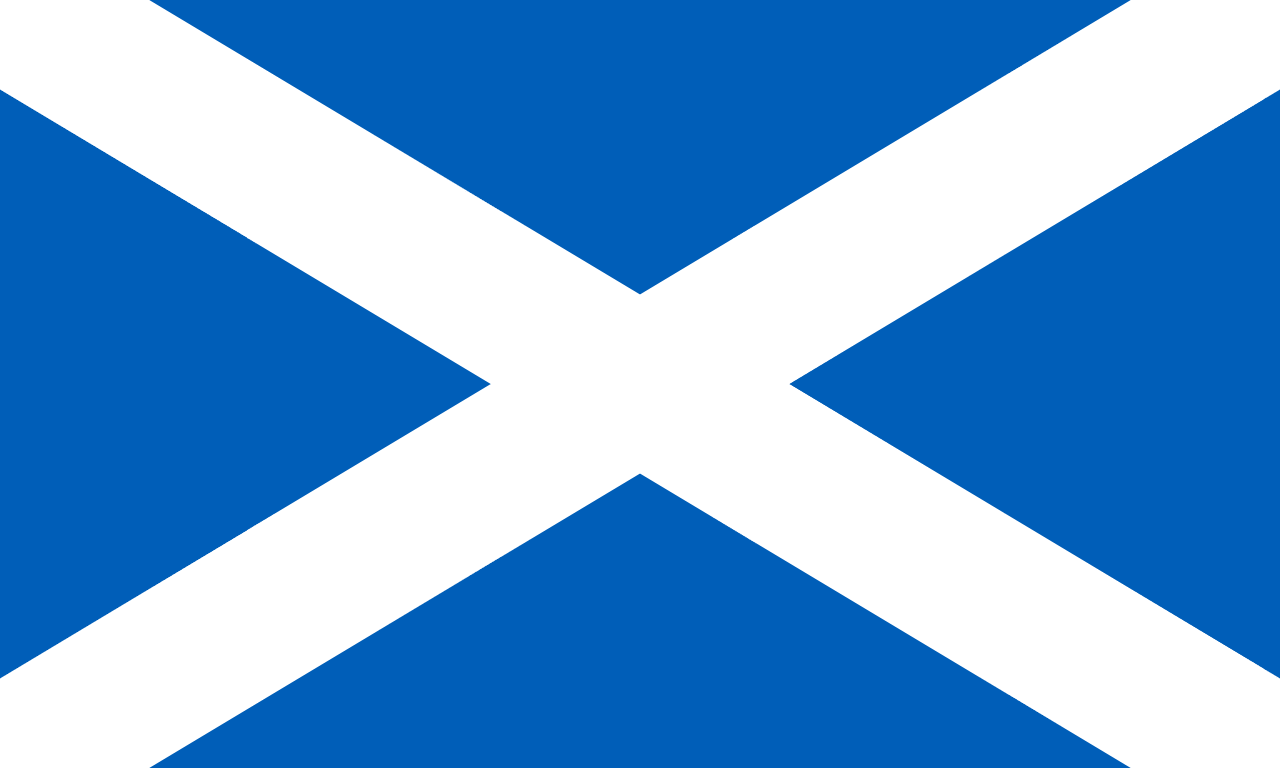
The Saltire - white diagonal cross of Saint Andrew on azure blue field, one of the world's oldest national flags.
- Continent
- Europe
- Adopted
- 12th century
- Ratio
- 3:5
- Colors
- blue, white
Symbolism
- White Saltire (X-shaped Cross)
- Represents the martyrdom of Saint Andrew, Scotland's patron saint, who was crucified on an X-shaped cross and refused to be crucified on the same type of cross as Jesus.
- Azure Blue Field
- Symbolizes the sky and sea surrounding Scotland, representing the nation's natural beauty, maritime heritage, and connection to the heavens.
- Saint Andrew
- The apostle Saint Andrew became Scotland's patron saint, symbolizing the Christian foundation of Scottish culture and the nation's spiritual identity.
- Diagonal Cross Design
- The X-shape distinguishes Scotland's flag from other cross-based flags and represents the unique character and independence of the Scottish people.
History
- 832 AD (Legend): According to legend, King Óengus of the Picts saw a white saltire cross against the blue sky before the Battle of Athelstaneford, leading to victory over the Angles.
- 12th Century: The Saltire began appearing on Scottish seals and documents, establishing itself as Scotland's national symbol during the medieval period.
- 1385: Scottish Parliament decreed that all Scottish soldiers should wear the white cross of Saint Andrew as identification in battle against English forces.
- 1606: The Saltire was incorporated into the first Union Flag when King James VI of Scotland became James I of England, uniting the crowns.
- 1707: Act of Union created the Kingdom of Great Britain, but the Saltire remained Scotland's distinctive national flag and symbol of identity.
- 1999: Scottish Parliament reconvened after 292 years, with the Saltire flying prominently over the new devolved government building in Edinburgh.
Trivia
- The Saltire is considered one of the oldest national flags in the world, predating most European national flags by centuries.
- The legend of King Óengus and the white cross in the sky at Athelstaneford is commemorated by a flag heritage center at the battle site.
- Scotland's flag appears in the Union Jack as the white diagonal cross, combined with England's St. George's Cross and Ireland's St. Patrick's Cross.
- The exact shade of blue has varied throughout history - 'Pantone 300' is now the official color for government use.
- Saint Andrew never visited Scotland, but his relics were allegedly brought to Scotland in the 4th century by Saint Rule (Saint Regulus).
- The Saltire flies above Edinburgh Castle every day except when the Queen is in residence, when the Royal Standard takes precedence.
- During the Scottish independence referendum in 2014, the Saltire became a powerful symbol of national identity and self-determination.
- The flag is incorporated into many other flags including Nova Scotia (New Scotland) in Canada and several Australian state flags.
- Traditionally, the Saltire should not touch the ground and should be raised quickly and lowered slowly as a mark of respect.
- The Scottish National Party uses a stylized version with a yellow saltire on blue, differentiating political symbolism from the national flag.
- Saint Andrew's Day (November 30) is Scotland's national day, when the Saltire is displayed prominently across the country.
- The flag features in Scottish clan badges, military insignia, and is worn by Scottish athletes at international competitions like the Commonwealth Games.
Related Countries
United Kingdom
Europe
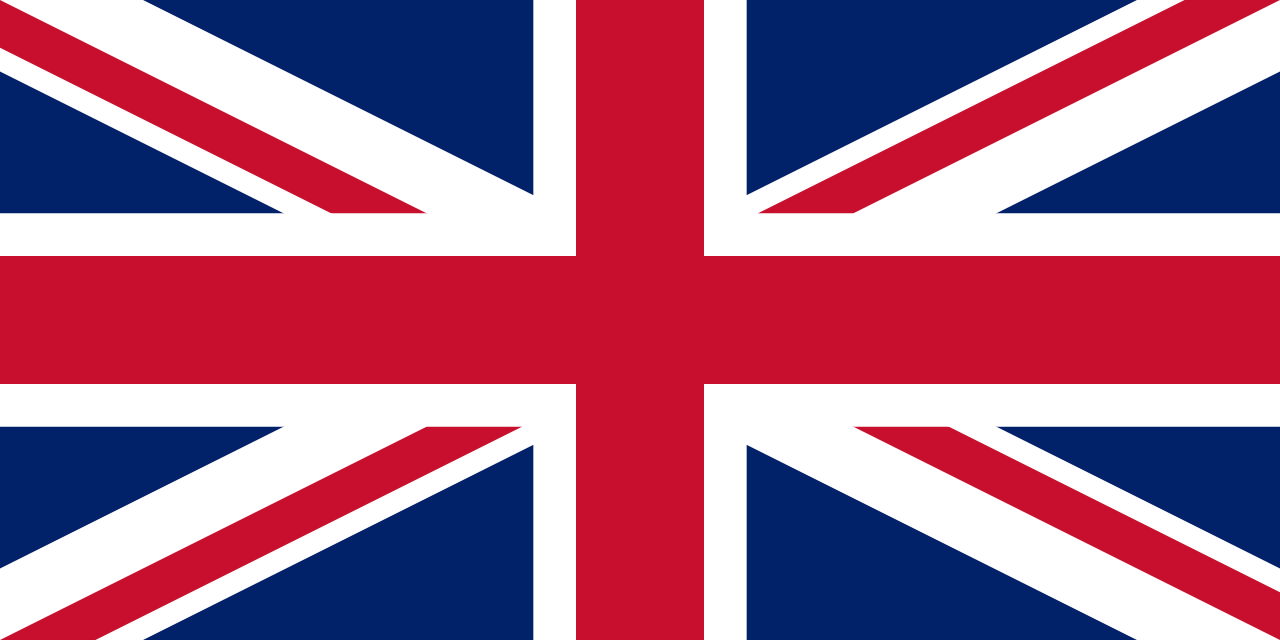
The Union Jack combines the crosses of Saint George (England), Saint Andrew (Scotland), and Saint Patrick (Ireland) on a blue field, representing the political union of England, Scotland, and Ireland under one crown, though Wales is not directly represented in the flag design.
Northern Ireland
Europe
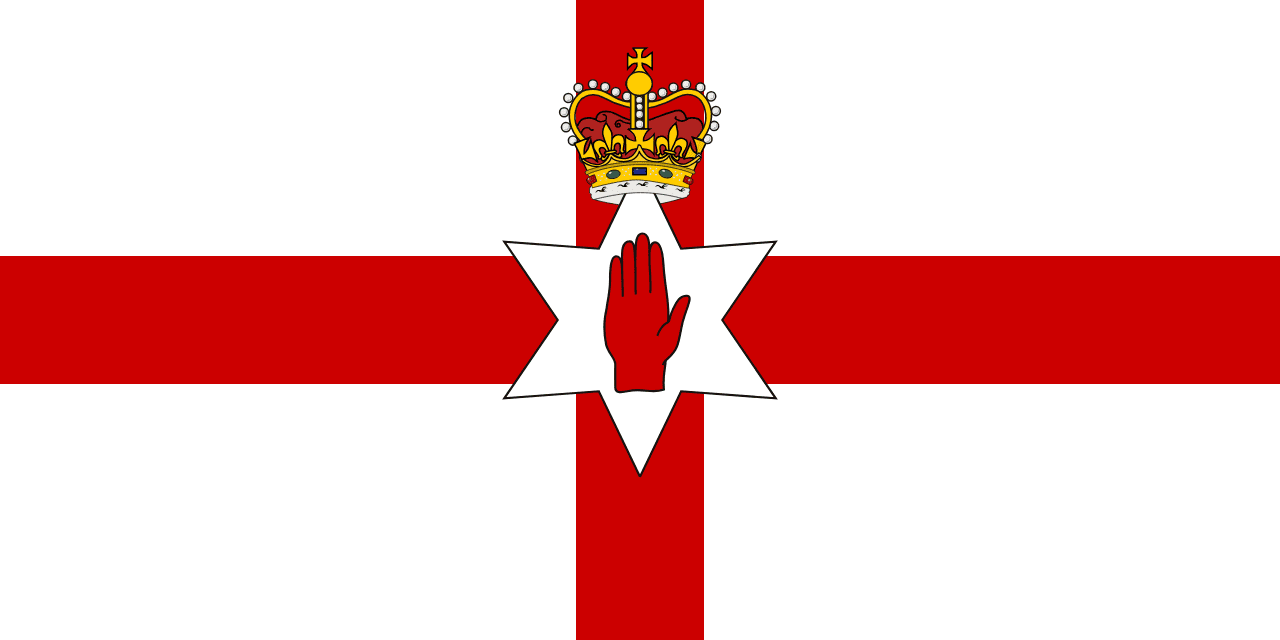
The Ulster Banner - featuring the Red Hand of Ulster on a white field with the Union Jack canton and crown, served as Northern Ireland's official flag from 1953-1972 and remains in unofficial use today.
Ireland
Europe
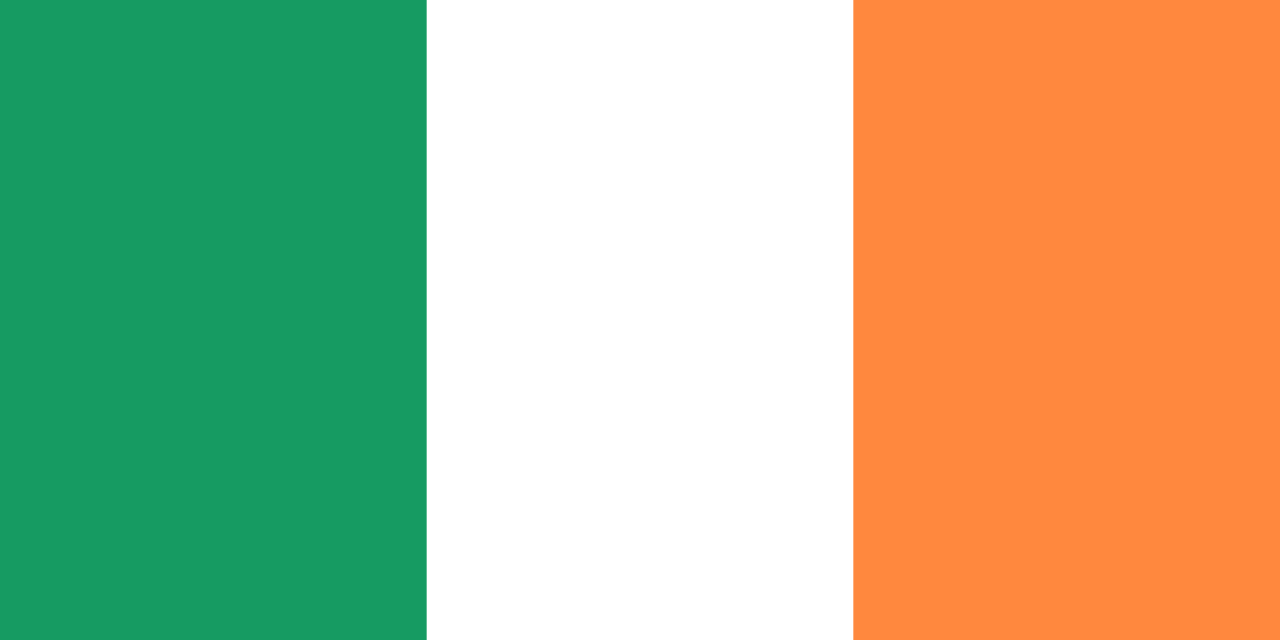
Three equal vertical stripes of green, white, and orange, representing the hope for peace between the Catholic and Protestant communities of Ireland, with the tricolor symbolizing unity and the aspiration for a harmonious Irish nation.
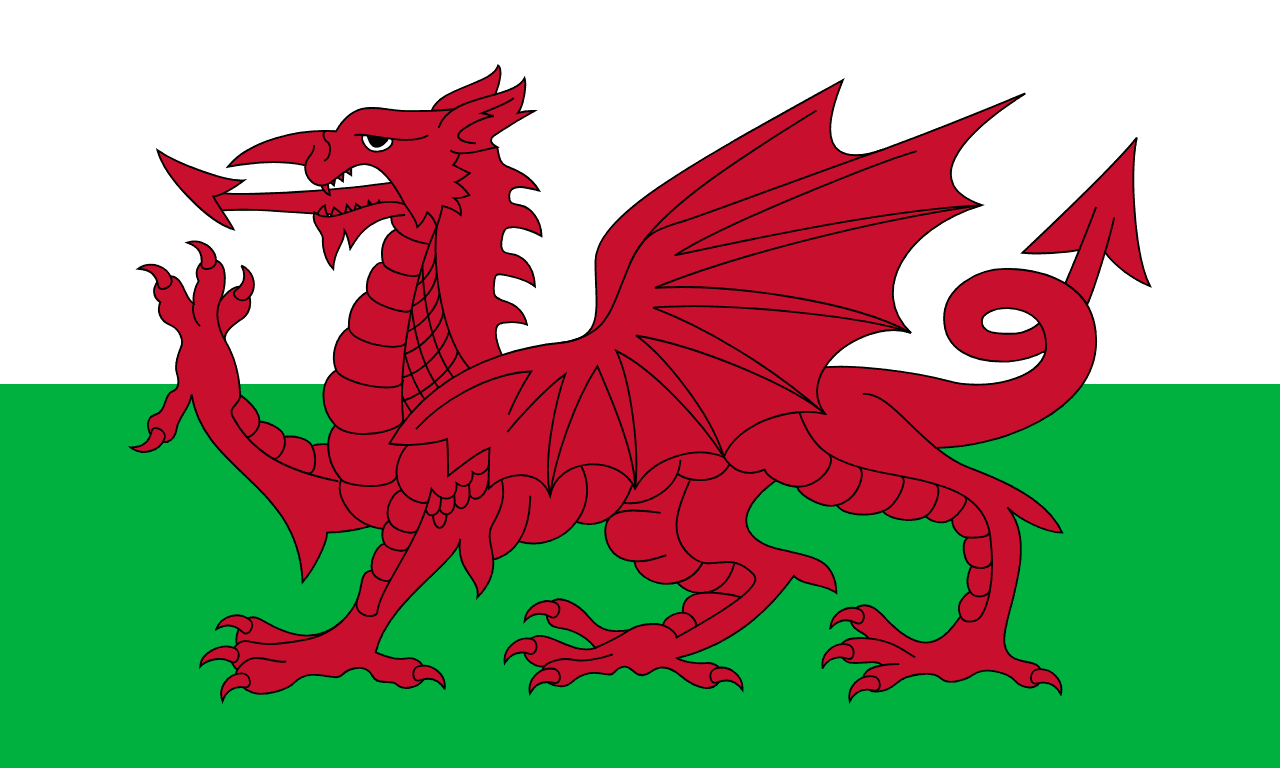
Wales
Europe
Y Ddraig Goch - the red dragon passant on green and white horizontal field, representing Welsh heritage and Celtic identity.
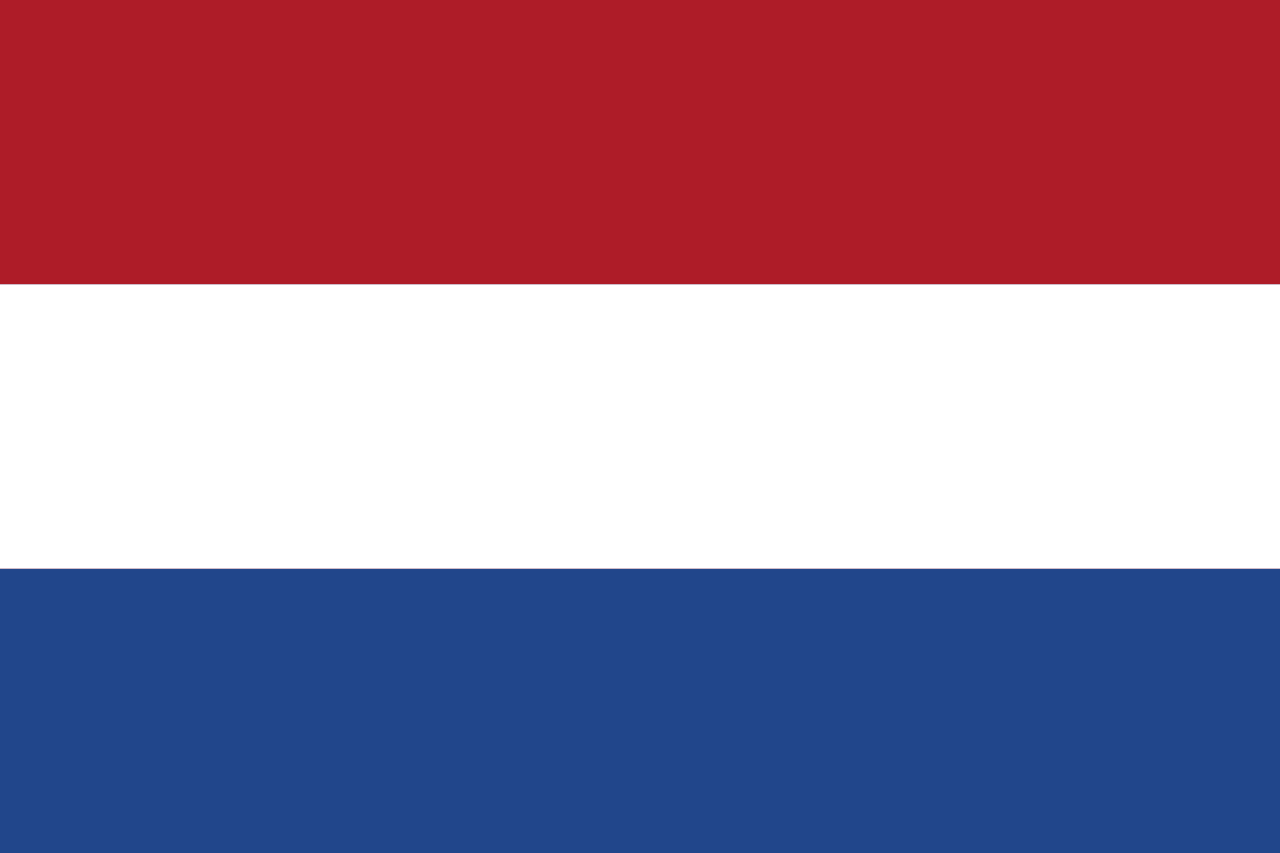
Netherlands
Europe
A horizontal tricolor of red, white, and blue, the oldest tricolor still in use today. It originated in the 16th century during the Dutch Revolt against Spain.
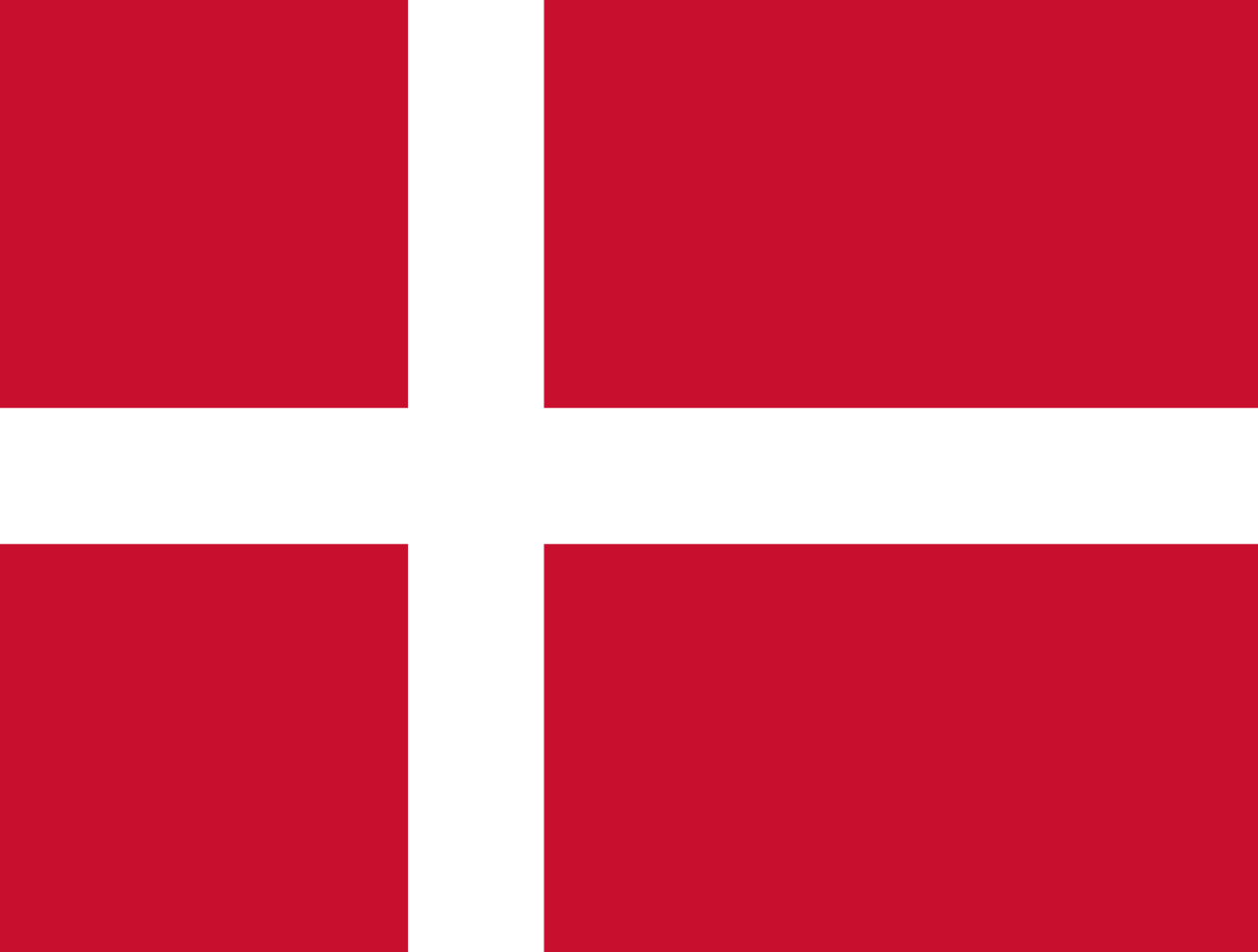
Denmark
Europe
A red field with a white Nordic cross slightly offset toward the hoist, known as the Dannebrog, representing one of the world's oldest national flags and the Christian heritage of the Danish kingdom.